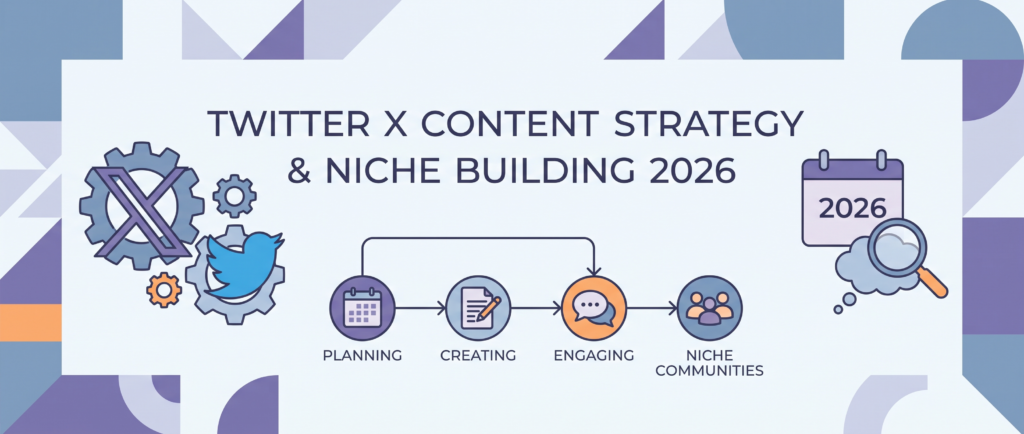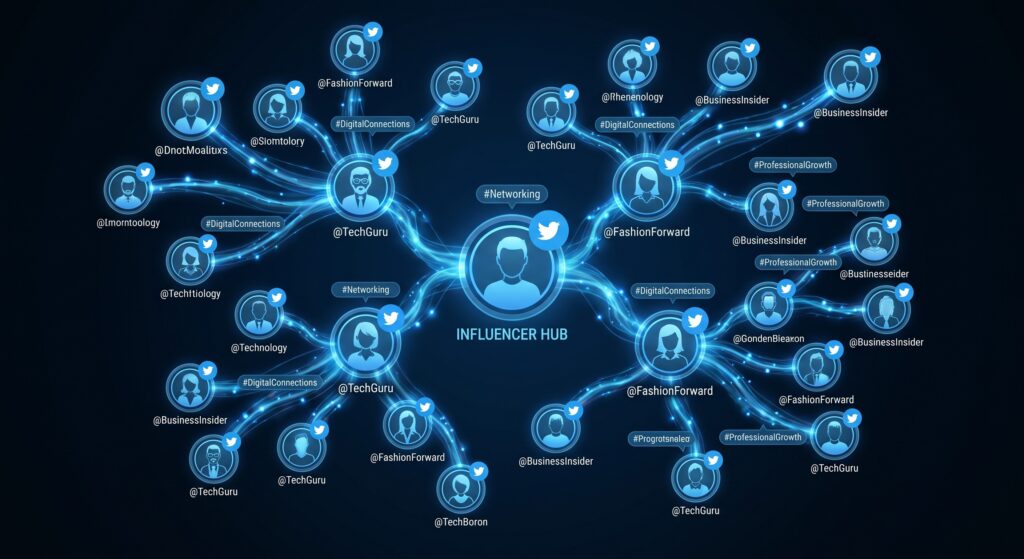
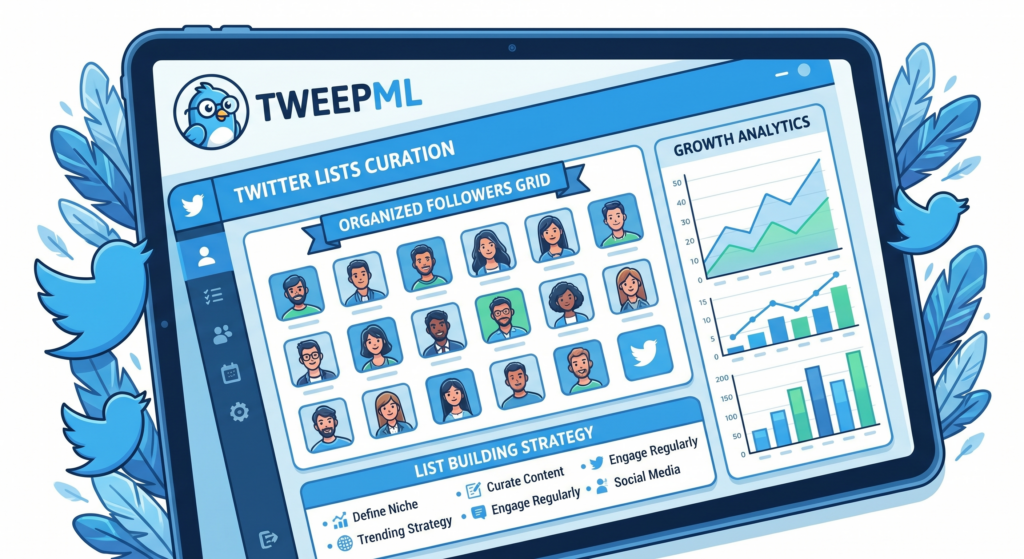
Most Twitter growth advice focuses on posting — write better threads, tweet more consistently, hook harder in the first line. That advice isn’t wrong, but it ignores a foundational truth about how audiences actually grow on social platforms: growth is relational, not just content-driven. The accounts that build genuine, engaged followings in 2026 aren’t just broadcasting great content into the void. They’re curating their world deliberately — following the right people, engaging with the right conversations, and using Twitter Lists as an active infrastructure layer rather than a passive bookmarking feature. When you combine strategic list curation with the import and sharing power of TweepML, you get a growth system that compounds over time in ways that content alone never will. This guide shows you exactly how to build it.
Why Lists Are the Underrated Core of Twitter Growth Strategy
Lists as Signal, Not Just Organization
Twitter Lists serve an obvious organizational function — grouping accounts by topic, role, or relationship type. But their strategic value goes deeper. When you add someone to a public list, they receive a notification. That notification is a form of recognition — you’re telling them, publicly, that you consider them worth curating. Done thoughtfully, list additions create goodwill and often prompt follows, visits to your profile, or direct engagement. At scale, a well-named public list becomes a curated resource that other users discover, follow, and share — driving inbound attention to your account from your list’s entire follower base.
Lists as a Feed Quality Multiplier
Your main Twitter feed is an algorithm-curated blend of accounts you follow, sponsored content, and “you might like” suggestions. A List feed is purely chronological and contains only the accounts you’ve deliberately chosen. For serious practitioners, this is how Twitter actually becomes useful: build a tight list of 30–50 high-signal voices in your niche and use that list as your primary feed. You’ll see more relevant content in 15 minutes of list-reading than in an hour of main-feed scrolling, and the engagement you derive from that focused reading will be more targeted and more effective.
Public Lists as Discovery Engines
A well-curated public list with a clear, searchable name — “Best SaaS Growth Marketers,” “Top Web3 Developers,” “Expert Indie Hackers to Follow” — gets discovered organically. Other users searching for those terms find your list, follow it, and in doing so encounter your account as the curator. This is ambient authority: you don’t need to claim expertise, you demonstrate it through curation. The best list curators on Twitter build followings not just because of what they post but because of what they organize.
Understanding TweepML and Its Role in List Strategy
What TweepML Is and How It Works
TweepML is a platform built around the portability of Twitter account lists. At its core, it lets you create, share, import, and export Twitter lists in a standardized format — making it trivial to distribute a curated list to anyone who wants to subscribe to it, bulk-import accounts into a Twitter List, or share your curation work with an audience. Where Twitter’s native list functionality is limited to manual, one-at-a-time account additions, TweepML enables list operations at a scale and speed that would otherwise be impossible. For growth-focused creators, this turns list curation from a maintenance chore into a genuine audience-building tool.
Key TweepML Use Cases for Growth
The primary growth applications of TweepML fall into three categories. First, list distribution: create a well-curated list, publish it on TweepML, and promote it as a free resource to your audience. People who import your list effectively import your curation judgment — and they often follow the curator in the process. Second, collaborative curation: build lists with multiple contributors, creating a stronger resource than any individual could maintain alone. Third, niche discovery: browse existing TweepML lists to rapidly find and follow high-quality accounts in topics you’re exploring, accelerating your own feed quality without weeks of manual searching.
TweepML vs. Native Twitter Lists: A Practical Comparison
Native Twitter Lists cap at 5,000 members and require manual, individual account additions through the Twitter interface. TweepML removes friction from bulk operations, enables sharing via URL, and creates a social layer around list curation that Twitter’s native tools lack. For most users, the ideal workflow combines both: use TweepML for bulk creation and distribution, use native Twitter list feeds for daily reading and engagement. The tools are complementary, not competing.
Building Your Strategic List Architecture
The Four List Types Every Creator Needs
A functional list architecture typically includes four types of lists. Signal lists (private): 20–50 of the highest-quality accounts in your niche — your daily reading feed. Engagement lists (private): 30–75 accounts you want to engage with consistently to build relationships — sorted by tier of relationship priority. Public authority lists: curated collections of experts in your niche that you publish as a resource and promote to build ambient authority. Monitoring lists (private): competitors, industry news sources, and trending accounts you want to track without following publicly.
Naming and Describing Lists for Maximum Discovery
Public list names and descriptions are indexed within Twitter’s search function. Use clear, descriptive names that match what people would actually search for: “Top Email Marketing Experts” outperforms “Marketing Peeps.” Write list descriptions with 2–3 sentences that explain who the list is for, what kinds of accounts are included, and how often it’s updated. A list with an active maintenance commitment (“Updated weekly”) signals curation quality and encourages more follows than a list that looks abandoned.
The Curation Criteria Framework
Random list-building produces random results. Effective curation requires clear criteria. Before adding accounts to any list, define: What niche or topic must they cover? What engagement quality threshold must they meet? What follower-to-following ratio is acceptable (a proxy for organic growth)? How recently must they have posted? Apply these criteria consistently and your lists will maintain quality as they grow. Prune quarterly — accounts that have gone inactive, pivoted topics, or dramatically dropped in quality should be replaced with fresher voices.
List-Driven Engagement Tactics That Build Real Followers
The Daily Engagement Stack
Consistent follower growth on Twitter requires consistent meaningful engagement — not likes, but thoughtful replies that add context, raise interesting questions, or share relevant experience. Build a daily habit: open your engagement list feed, read through the latest 20–30 tweets, and reply substantively to five or six of them. This takes 15–20 minutes. Done every day for 90 days, it creates a visible presence in the conversations that matter to your target audience. People who see your replies repeatedly in their own conversations begin to recognize your name, check your profile, and follow you — without any promotion required.
Amplification Through List Promotion
When you launch a new public list, promote it as a standalone content piece. A tweet like “I just curated a list of the 50 most consistently valuable [niche] voices on Twitter — people who post original thinking, not just news aggregation. Free to follow and import via TweepML: [link]” performs well because it’s genuinely useful, it names 50 people (who will often retweet it when they see they’ve been included), and it positions you as a niche authority. The accounts on the list become organic promoters of the list and, by extension, of you as its curator.
Using Lists to Identify Collaboration Targets
Your engagement list is a living record of who you’re building relationships with. Review it monthly and ask: which of these accounts have I built enough rapport with to propose a collaboration? A joint thread, a newsletter swap, a podcast appearance? List-driven relationship building gives you a systematic way to track the relationship funnel from “new connection” to “active collaborator” without relying on memory or random scrolling to surface the right people at the right time.
Growing Your Audience Through Shared and Discoverable Lists
The List-as-Lead-Magnet Strategy
Treat a high-quality TweepML list the same way content marketers treat a lead magnet. Identify a specific, high-value list that your target audience would genuinely want — “50 Best Indie SaaS Founders to Follow,” “The Definitive List of No-Code Educators” — and promote it in your Twitter bio, pinned tweet, and newsletter. People who find and import your list are exactly the right audience for your content, and the act of importing signals a level of interest and intent that a random follow rarely does. Over time, these list subscribers become your highest-engagement followers.
Collaborative Lists and Community Building
One of TweepML’s most powerful applications is enabling collaborative curation. Reach out to three to five complementary creators in your niche and propose building a shared list together — each person contributes 15–20 of their highest-recommended accounts in a specific sub-niche. The combined list is richer than anything any one person could build alone, and all contributors have an incentive to promote it. The result is a piece of content that earns followers for every participant while building a genuine community around the act of curation itself.
Cross-Platform Distribution of TweepML Lists
A TweepML list URL can be shared anywhere: newsletters, blog posts, Slack communities, LinkedIn posts, Discord servers, Reddit threads. Every external distribution point drives new people to your list, and from your list to your Twitter profile. Build a habit of including your most valuable public list URL in every piece of long-form content you publish. Over a year, this creates a persistent discovery funnel that continues driving profile visits and follows long after the content that contains it has faded from the feed.
List Strategy Comparison Table
| List Type | Public or Private | Primary Purpose | Ideal Size | TweepML Use | Growth Impact |
|---|---|---|---|---|---|
| Signal / Reading Feed | Private | Daily high-quality content consumption | 20–50 | Low | Indirect (better content) |
| Engagement Targets | Private | Systematic relationship building | 30–75 | Low | High (direct follower growth) |
| Authority/Resource List | Public | Ambient authority, inbound discovery | 50–200 | High (share + distribute) | Very high |
| Competitor Monitor | Private | Competitive intelligence | 10–30 | Low | Indirect (strategic insight) |
| Collaborative List | Public | Community building, co-promotion | 75–300 | Very high | Very high |
| Lead Magnet List | Public | Audience acquisition funnel | 50–150 | Very high | High |
| Industry News Feed | Private | Trend and topic monitoring | 20–60 | Low | Indirect (content ideas) |
Frequently Asked Questions
How many Twitter Lists should I maintain?
Most active users find four to six lists sustainable. More than that and maintenance quality drops — lists become stale and lose their value. Focus on keeping a small number of lists excellent rather than maintaining a large number of mediocre ones. Quality curation is the entire point.
Does adding someone to a Twitter List help build a relationship with them?
Yes, particularly for public lists. When you add someone to a public list with a meaningful name — “Top [Niche] Voices” or “People I Learn From” — they receive a notification and often check who added them. If your profile is compelling, this frequently results in a follow or an engagement. It’s a low-friction way to initiate a relationship without a cold DM.
Can I use TweepML to import a list and follow all accounts on it automatically?
TweepML is designed for list import and management. The degree of automation depends on the tools and API access you use in conjunction with it. Always ensure any automated following behavior complies with Twitter’s current Terms of Service, which restrict aggressive automated following patterns.
How often should I update my public lists?
Active curation signals credibility. A monthly review and refresh — adding new standout accounts, removing those that have gone inactive — is a reasonable maintenance cadence for most lists. If you promote a list heavily, consider a more frequent update cycle (every two weeks) and note the update date publicly to signal that the list is actively maintained.
What makes a TweepML list worth promoting?
The best-performing TweepML lists have a specific, searchable niche; a high enough member count to feel comprehensive (50+ accounts); a clear description of who the list is for; and consistent curation quality. Lists that try to cover everything for everyone typically underperform compared to highly focused lists built for a specific audience.
How does list curation contribute to content creation?
Your lists, particularly your signal and engagement lists, are your content research feeds. Regularly reading the best thinkers in your niche gives you a constant stream of ideas to build on, respond to, quote-tweet with commentary, or expand into long-form threads. The most consistently good Twitter accounts aren’t posting in isolation — they’re deeply embedded in niche conversations, and lists are the infrastructure that makes that possible.
Is there a risk that adding competitors to lists could signal weakness?
No — publicly acknowledging respected competitors signals confidence and authority, not weakness. Curating a comprehensive niche list that includes competitors shows your audience that you’re a genuine expert who understands the full landscape, not someone who avoids acknowledging alternatives. This kind of intellectual honesty actually builds trust faster than pretending competitors don’t exist.
Can list-based growth replace posting consistently?
No — they’re complementary. List curation amplifies good content by ensuring it reaches the right people through engagement and relationship building. But if your content is thin, no amount of curation strategy will substitute for it. The ideal approach is strong content plus systematic list-based engagement and distribution. Each multiplies the impact of the other.
Conclusion
Building a meaningful Twitter following in 2026 requires more than a content calendar and good hooks. It requires a deliberate infrastructure — the right accounts in the right lists, read and engaged with systematically, distributed intelligently through tools like TweepML. The creators and brands who grow fastest on the platform aren’t louder than their peers; they’re more organized, more intentional about their relationships, and more generous with their curation. Start with your four core list types, build one genuinely excellent public list worth promoting, distribute it via TweepML, and commit to 15 minutes of list-based engagement every day. Do that consistently for six months and you’ll have built something most Twitter growth advice completely ignores: a real network, not just a follower count.