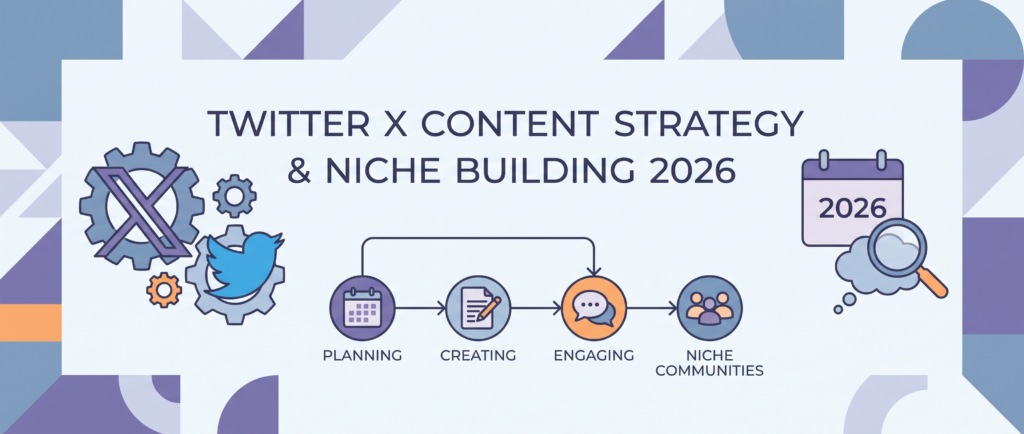
Most people approach Twitter without a strategy — they post when inspired, engage sporadically, and wonder why growth feels random. In 2026, the accounts that consistently grow audience, build influence, and generate tangible results from Twitter are the ones operating from a clear, intentional content strategy. Building that strategy from scratch doesn’t require a marketing degree — it requires answering a specific set of questions and executing consistently against the answers.
Step 1: Define Your Twitter/X Purpose and Niche
Why Are You on Twitter?
The most effective Twitter strategies start with clarity of purpose. Common purposes include: building professional authority in a specific field, driving traffic to a newsletter or blog, generating consulting or freelance leads, building a community around a shared interest, or establishing a personal brand for career advancement. Your purpose shapes every other decision in your strategy.
Choosing Your Niche
Twitter rewards specificity. “I tweet about marketing” is too broad. “I tweet about email marketing for SaaS companies” is better. “I help B2B SaaS marketers grow organic email lists without paid ads” is a niche with a clear audience. The more specifically you define who you serve and what you help them do, the more quickly the right people will follow you — and the more valuable those followers will be.
Competitor and Inspiration Account Analysis
Identify 10–15 accounts in your niche that are performing well. Analyze what they post, how often, what generates the most engagement, and what audience they attract. You’re not looking to copy — you’re looking to understand what resonates in your space and where the content gaps are that you could own.
Step 2: Define Your Content Pillars
What Are Content Pillars?
Content pillars are the 3–5 recurring themes that organize your posting strategy. For a B2B marketing consultant, pillars might be: growth tactics, tool reviews, client case studies, industry news commentary, and personal experience stories. Pillars ensure variety without randomness — your audience knows what to expect from you, and the algorithm sees consistent topical signals.
Balancing Educational, Personal, and Promotional Content
A sustainable content mix for most Twitter strategies is approximately: 60% educational/valuable, 25% personal/story-based, and 15% promotional. All-educational accounts are valuable but forgettable; all-promotional accounts are ignored; accounts that blend expertise with personality build the deepest audience loyalty.
Step 3: Define Your Posting Schedule
Finding Your Optimal Frequency
Quality beats frequency on Twitter, but consistency matters more than either. A realistic starting schedule for most creators is 3–5 high-quality posts per week, plus strategic replies and engagement with others in your niche daily. As you build momentum and content systems, increase to 1–2 posts per day if you can maintain quality.
Building a Content Queue
Batch-write content weekly rather than posting spontaneously. Tools like Buffer, Typefully, or Hypefury allow you to schedule posts in advance, maintain consistent publishing even during busy periods, and plan content that aligns with upcoming events, dates, or launches.
Step 4: Create Your Content Formats
Threads
Long-form Twitter threads are among the most shareable and high-reach content formats on the platform. Structure them with a compelling hook tweet, numbered points or narrative progression, and a closing tweet with a call to action. A well-crafted thread can generate weeks of engagement and profile visits.
Single Tweets
Single tweets work for quick insights, questions, reactions to news, and observations. Keep them punchy — the best-performing single tweets make one clear point with a surprising angle or actionable insight.
Visual Content
Tweets with images receive significantly higher impressions and engagement than text-only posts. Use screenshots of data, custom graphics, charts, and infographics to make your expertise visible. Tools like Canva make creating on-brand Twitter graphics fast and consistent.
| Content Format | Avg. Reach | Best For | Frequency |
|---|---|---|---|
| Educational Thread | Very High | Authority, shares, follows | 1–2x per week |
| Single Insight Tweet | Medium-High | Daily engagement, visibility | 1–2x daily |
| Image/Infographic | High | Saves, shares, impressions | 2–4x per week |
| Poll | High (low depth) | Engagement spike, market research | 1–2x per week |
| Reply to Trending Post | Variable (very high ceiling) | New audience exposure | Daily |
| Personal Story Tweet | Medium-High | Authenticity, connection | 2–3x per week |
Step 5: Build Your Engagement System
Daily Engagement Routine
Posting is only half the strategy. Spend 15–30 minutes daily engaging with others in your niche: reply to posts, join conversations, acknowledge mentions, and follow high-value accounts. This activity builds relationships, increases your visibility to new audiences, and signals to the algorithm that you’re an active, engaged community member.
Tracking and Iteration
Review your Twitter Analytics monthly. Identify your top 5 performing posts by engagement rate. Look for patterns — what topics, formats, or angles consistently outperform? Update your content strategy based on data, not assumptions. The accounts that grow fastest are the ones that iterate most intelligently.
Frequently Asked Questions
How long does it take to grow a Twitter account?
With consistent execution of a clear strategy, most accounts gain meaningful traction (1,000–5,000 engaged followers) within 6–12 months. Viral moments can accelerate this, but consistent growth is more reliable.
Should I use AI tools to help create Twitter content?
AI can help with brainstorming, drafts, and scheduling — but your voice, unique insights, and real experiences should drive your strategy. Audiences detect and disengage from purely AI-generated, generic content.
How important is it to reply to comments on my posts?
Critical — replies signal to X’s algorithm that your content is valuable, and they build the community that makes your account worth following. Aim to reply to every comment on your posts when your volume allows.
Should I focus on one niche or be a generalist?
Start focused. It’s far easier to build an engaged audience with a specific value proposition. You can expand your content scope organically once you’ve established authority in your core niche.
What’s the biggest mistake new Twitter accounts make?
Posting without engaging. Growth requires both — consistent publishing AND active community participation. Accounts that only broadcast and never engage grow slowly and retain poorly.
How do I stay consistent with content creation?
Batch creation + scheduling tools + a realistic publishing goal. Set a sustainable posting frequency you can maintain for 6 months, not an ambitious one you’ll abandon in 6 weeks.
When should I consider running Twitter ads?
After you’ve validated your organic content strategy — you know what resonates with your audience. Ads amplify what’s working; they can’t fix a content strategy that isn’t.
Conclusion
Building a Twitter/X content strategy from scratch is less complicated than it appears when you approach it systematically. Define your purpose and niche, identify your content pillars, set a realistic publishing schedule, master a few content formats, and build a daily engagement habit. Execute that system consistently for six to twelve months, iterate based on analytics, and you’ll have an account that compounds in value — generating reach, relationships, and results that justify the investment. Start simple, stay consistent, and optimize relentlessly.