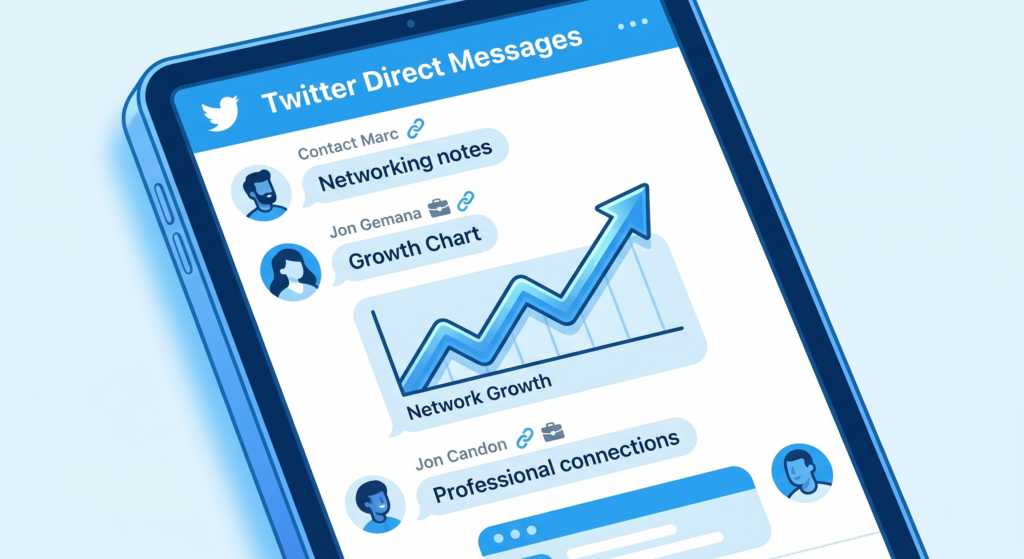
Twitter/X Direct Messages have a reputation problem. Most people’s DM inboxes are a graveyard of copy-paste pitches, automated “thanks for following” blasts, and link-dropping strangers who’ve never once engaged with their content. Yet for the relatively small number of people who use DMs with genuine intent and strategic thinking, the channel is extraordinarily effective — producing partnerships, clients, collaborators, and friendships that public @mentions rarely create. In 2026, as the platform continues to evolve its creator and business features, DMs have quietly become one of the highest-ROI channels for professional networking if you know how to use them right. This guide lays out the exact strategies that work, the ones that backfire, and how to build a DM-driven growth system that doesn’t feel like spam to anyone — including you.
Why Twitter DMs Are a Underrated Growth Channel in 2026
The Signal-to-Noise Advantage
Public Twitter is loud. Every reply, quote tweet, and @mention competes for attention in a crowded feed. A thoughtful DM arrives in a private space where the recipient’s guard is lower and your message has their full attention — if it earns it. The key phrase is “if it earns it.” A DM that feels like a broadcast gets ignored or reported. A DM that feels like a genuine, considered message gets read, remembered, and often replied to. The channel is only underused because people conflate it with email marketing automation. It isn’t. It’s closer to walking up to someone at a conference and starting a real conversation.
X’s 2025–2026 DM Feature Expansion
X has meaningfully expanded DM functionality over the past 18 months. Voice messages in DMs, improved group DM threading, and enhanced media sharing have made the channel richer. X Premium subscribers can now DM anyone, even accounts that haven’t followed them back — a significant unlock for outreach. Non-premium users can still DM anyone who has their DMs open, and many active creators and professionals do keep them open precisely because they want inbound connections. Understanding the current DM feature set helps you choose the right format for the right message.
DMs vs. Other Outreach Channels
Compared to cold email, Twitter DMs offer one massive structural advantage: context. When you DM someone on Twitter, they can immediately scroll your profile, see what you’ve posted, check your engagement, and assess your credibility. A compelling public presence dramatically increases DM response rates. This creates a virtuous cycle: build in public, earn credibility, reach out privately. Email has no such warm-up layer. LinkedIn messages are now so saturated they perform similarly to cold email. Twitter DMs, used well, still have a novelty and authenticity advantage that other channels have lost.
The Anatomy of a DM That Gets a Response
The Specificity Rule
The single most important factor in DM response rates is specificity. Generic messages — “Hey, love your content! Would love to connect” — get ignored because they could have been sent to anyone. Specific messages — “Your thread last Tuesday about pricing psychology changed how I think about our SaaS onboarding flow. I’ve been testing your suggestion about anchoring and wanted to share what happened” — get responses because they demonstrate you actually paid attention. Specificity signals respect for the recipient’s time and establishes that this isn’t a blast. It takes longer to write specific messages. That’s the point.
The One-Ask Rule
Every DM should have at most one clear ask — and ideally none at all in a first message. Opening with a request puts the recipient in a defensive posture immediately. Opening with genuine value, a specific observation, or a simple connection point sets a collaborative tone. If you do have an ask, make it as small and frictionless as possible: “Would it be okay if I shared something I built that solves this?” is easier to say yes to than “Can we get on a 30-minute call?” Reserve larger asks for after you’ve had at least one exchange.
Ideal DM Length and Format
Keep first DMs short: 3–5 sentences is ideal. People are reading on mobile. Long walls of text signal that you’re more interested in saying everything you’ve rehearsed than in starting a real conversation. Leave room for them to respond. Think of a DM as the opening line of a dialogue, not a pitch deck. Second and third messages can be longer as the conversation develops. Voice DMs are worth experimenting with for a second follow-up — they’re still novel enough to stand out and convey warmth that text can’t replicate.
Strategic Use Cases for Twitter DMs
Reaching Out to Collaborators and Co-Creators
Twitter is one of the best platforms for creator collaboration — joint threads, newsletter swaps, podcast appearances, and product partnerships regularly begin in DMs. The key is leading with what you can offer rather than what you want. “I’ve been building an audience around [topic]. Your readers seem to overlap with mine. I have an idea that might drive value to both our audiences — would you be open to a quick async exchange about it?” This framing is specific, respectful, and positions the collaboration as mutual rather than one-sided.
Converting Followers into Customers or Clients
When a follower engages consistently with your content — liking threads, replying thoughtfully, referencing your ideas in their own tweets — they are a warm lead. A timely, genuine DM can convert that engagement into a conversation. Monitor your notifications for repeat engagers using Twitter’s activity feed or a list-based monitoring setup through TweepML. When someone has engaged three or more times, the DM is no longer cold outreach — it’s a natural continuation of a conversation already in progress.
Building Relationships with Industry Mentors and Peers
Most people assume that high-follower accounts are unreachable. In practice, many of the most successful creators, investors, and operators on Twitter are genuinely accessible via DM — especially when the message is excellent. A DM that leads with a specific insight, shares a useful resource, or asks a thoughtful question (not a generic “can I pick your brain?”) has a surprisingly high response rate even from accounts with hundreds of thousands of followers. The bar isn’t having clout. The bar is sending a message worth responding to.
Following Up After Public Interactions
One of the most natural and effective DM triggers is a meaningful public exchange. When you’ve had a genuine back-and-forth in a reply thread — real substance, not just “great point!” — a DM that continues the conversation privately is not only appropriate, it’s expected. “Enjoyed that exchange in [thread] — wanted to continue the thought somewhere less public” is a perfectly natural opener. Public engagement is the warm-up; DMs are where the relationship deepens.
DM Sequences and Follow-Up Strategy
When and How to Follow Up
Not every DM gets a response — and that’s fine. If you’ve sent a genuinely good first message and haven’t heard back after five to seven days, one follow-up is reasonable. Keep it brief: “Wanted to bump this up in case it got lost — no pressure either way.” After a second non-response, move on. Persisting beyond two messages signals poor judgment and will damage your reputation with that person permanently. The goal of follow-up is to ensure your message was seen, not to apply pressure.
Building a DM Pipeline Without Automation
Automation — bots that DM new followers, mass DM blasts, “DM me for the link” sequences — is both against Twitter’s terms of service and deeply counterproductive. It trains your audience to expect impersonal interactions and burns goodwill at scale. Instead, build a manual pipeline. Identify five to ten people per week you genuinely want to connect with based on their content, engagement, or professional profile. Send thoughtful, individual DMs. Maintain a simple note or spreadsheet tracking who you’ve reached out to, when, and what the status is. Ten excellent DMs per week compounding over a year produces hundreds of real relationships.
Group DMs for Community Building
Twitter’s group DM feature is underutilized for community building. Curating a small group (8–15 people) of engaged, like-minded professionals in your niche creates a private slack-like environment without requiring anyone to download another app. These groups become accountability circles, early-feedback channels, and referral engines. The critical success factor is curation: every person should add value to every other person. A bloated group of 50 devolves quickly. Keep it small, keep it high-signal, and contribute actively yourself.
DM Etiquette and What to Avoid
The Behaviors That Get You Blocked (and Reported)
Certain DM behaviors destroy relationships instantly: sending affiliate links without context, pitching immediately in a first message, asking for retweets or follows, DMing the same person multiple times without a response, and using obviously templated messages. These behaviors aren’t just ineffective — they actively harm your reputation. Twitter’s spam detection has improved substantially, and repeated reports can restrict your DM access. The platform has made it easier for users to report and filter DMs in 2025–2026, meaning low-quality outreach now carries real account risk.
Respecting Boundaries and Reading Signals
Not everyone wants to engage via DM. Some accounts explicitly state in their bio that DMs are closed for business inquiries. Respect this. Others will respond to your DM but give short, disengaged answers — read the signal and don’t push for more than they’re willing to give. The best professional relationships are built on mutual enthusiasm. If someone isn’t excited to talk to you, no volume of follow-up messages will change that, and the energy is better invested in people who are.
Twitter DM Strategy Comparison Table
| DM Approach | Response Rate | Relationship Quality | Scale | Risk Level | Best For |
|---|---|---|---|---|---|
| Cold generic DM | 1–3% | Very low | High | High (spam flags) | Nothing — avoid |
| Cold specific DM | 15–30% | Medium | Low | Low | Targeted outreach |
| Post-engagement DM | 40–60% | High | Low–Medium | Very low | Relationship building |
| Warm intro DM | 60–80% | Very high | Very low | Very low | High-value connections |
| Automated DM blast | 0.5–2% | Very low | Very high | Very high (TOS risk) | Nothing — avoid |
| Group DM (curated) | N/A | Very high | Medium | Very low | Community building |
| Voice DM follow-up | 25–45% | High | Very low | Very low | Standing out in warm threads |
Frequently Asked Questions
Can I DM someone on Twitter/X who doesn’t follow me?
X Premium subscribers can DM anyone on the platform regardless of follow status. Free users can DM anyone who has their DMs set to “open to everyone” in their privacy settings. Many active creators and professionals keep DMs open specifically to receive inbound connections.
How do I know if my DMs are set to open?
Go to Settings → Privacy and Safety → Direct Messages and check the “Allow message requests from everyone” option. You can also filter message requests separately from your main inbox to review them before they enter your primary DM feed.
What’s the best time to send a DM?
There’s no universal best time, but DMs sent shortly after a meaningful public interaction tend to get the best responses — the conversation is still fresh in the recipient’s mind. Avoid sending DMs late at night or on weekends if you’re reaching out for professional reasons, as it can feel intrusive even in a digital context.
How many DMs per day is safe to avoid being flagged as spam?
Twitter doesn’t publish hard limits, but as a rule of thumb, fewer than 20–30 unsolicited DMs per day is generally considered safe. Quality matters far more than quantity. Even 5 excellent DMs per day will outperform 100 generic ones both in response rate and account health.
Should I pitch in my first DM?
Almost never. The first DM should establish a connection — a specific observation, a genuine compliment, a useful resource. Pitching immediately frames the interaction as transactional before any trust has been built. The exception is if someone has explicitly asked to be pitched (e.g., “DM me your rates”).
How do I use DMs for affiliate or product promotions without being spammy?
Only DM people you’ve already had public interactions with and only when the product is genuinely relevant to a conversation you’ve already had. Lead with the value, not the commission. “I know you mentioned struggling with X — I’ve been using [product] and it’s solved that for me, thought it might help you too” is far more effective and respectful than a link drop with a referral code.
Can Twitter DMs replace email for business development?
For initial outreach, DMs can outperform cold email significantly due to the context advantage. For longer-form conversations, contracts, or detailed proposals, email is still more appropriate. Think of DMs as the opening handshake that earns you the right to send an email — they lower the barrier to entry considerably.
What should I do if someone is spamming me with DMs?
Use the “Report” and “Block” features built into the DM interface. You can also filter message requests so they don’t appear in your primary inbox until you approve them. Twitter’s spam detection uses these reports, so reporting genuine spam helps protect other users as well.
Conclusion
Twitter DMs are one of the last high-trust, low-competition channels in digital networking — but only when used with care and genuine intent. The gap between how most people use DMs (broadcast, generic, self-serving) and how the best relationship builders use them (specific, generous, patient) is enormous, and that gap is your opportunity. Build in public to earn context. Reach out privately with specificity and genuine value. Follow up once, then respect the silence. Maintain a small pipeline of meaningful connections rather than blasting hundreds of messages into the void. Done well, ten well-crafted DMs per week will build more business and career momentum than almost any other channel available to you on the platform in 2026.
—